Film: Tom Hooper: The King’s Speech (2010)

Posted in Film Reviews on March 14, 2011 by baker

How our better critical selves shouldn’t miss the bygone days of The Miramax-Produced Movie: Shakespeare in Love, The Cider House Rules, Chocolat, Gangs of New York. Never in American cinema, before or since, has so much concentrated sap and sincerity been injected into our theatrical intake, saturating our brains with high-glucose lies. Miramax got away with it because they lied about cute stuff (orphan children and candy) and niche history (Shakespeare and the Five Corners) instead of catastrophic social issues like disease, war, or famine, and we let them because the trade-off came in the form of confection: films we enjoyed consuming for their harmless sugar rush of Good Feelings or Easy Empathy (or Watered-Down Art, of the likes Scorsese’s been making ever since). Continuing to lament our shortage of taste and discrimination in these glorious times of Miley Cyrus, “American Idol”, and endless movie remakes seems terribly pointless in the face of popular momentum (and we are still getting our There Will be Bloods, Bob Woodward reportage, and Radiohead albums), but there remains in me a calling, like a body demanding nutrients, for richer, healthier art.

2010 was not a fulfilling year for Hollywood cinema, replete as it was with depressing remakes: The Wolfman, Alice in Wonderland, A Nightmare on Elm Street, Clash of the Titans, Robin Hood, The A-Team, The Karate Kid. Potentially wonderful films like The Killer Inside Me somehow failed to develop real depth, and adaptations like Shutter Island and The Ghost Writer, both by directors of formidable skill, collapsed in showy displays of empty style. We got a smattering of interesting but non-threatening films (Winter’s Bone, The Social Network, The Town), but other cultures had to give us Enter the Void, A Prophet, and Lebanon, and National Geographic released the most sophisticated documentary, Restrepo. Into that scene slipped the BBC-Miramax (now The Weinstein Company) lovechild, Tom Hooper’s The King’s Speech, a soft and cuddly happy-weeper that hits all the proper notes, if none of the arresting ones. It’s got a lot of pretty shots in historical settings. Shakespeare quotations. Physiological torment. A loving woman. A best friend forged in the furnace of well-meaning stubbornness. Nazi villains. And a hefty performance by a familiar Brit who’s never shown so much leading-man gravity.

What’s not to love? The King’s Speech is a puppy of a film, bouncy and lovable and too immature to criticize. Colin Firth is quite good, insofar as imitating King George VI’s speech is acting and sudden outbursts of anger are expressive (this is not a criticism; he embodies the part well, but it’s half-formed for a film that wants to be historically significant but lacks the willingness to put aside its comparatively inane drama). David Seidler’s script – evidently based on his own stammering as a child, and built on scenes between the king, his wife the Queen Mother (Helena Bonham-Carter) at his side, and his adorably good-natured therapist (Geoffrey Rush), who’s willing to put up with every one of George’s tantrums because he knows precisely how Seidler will use them to launch their relationship to a more profound level of bourgeois trust – provides a slew of agreeable, simplistic one-liners and English dryness. Hooper throws his camera into the mix with apparent stylistic abandon, as BBC and HBO have been doing for a while now with TV docudramas like Into the Storm and Warm Springs. It’s a sloppy film language, full of ridiculous close-ups, wide-angle Steadicam moves, and off-kilter frames that draw attention to themselves without formal purpose beyond keeping you visually involved, and it further contributes to a growing sense, watching the film, that its whole design is a series of dangled carrots, promising future riches but denying our appetites anything but a range of sweets: some cheap SweetTarts, some dark Godiva, but sugar nonetheless. So a chocolate puppy, then – fine. I could get frustrated with its cynically inept coincidence of Nazi threat with the king’s sudden (and, really, sort of inexplicable) ability to speak, thus providing a “voice” for the (comically rapt) people of England listening to his ultimate speech – but this is, after all, basically a Miramax Movie; its pretenses aren’t worth getting angry over. This is no Slumdog Millionaire.

But nor are they worth lauding. I can understand The King’s Speech being an enjoyable experience – this is the first film ever made that produced simultaneous recommendations from both of my parents – and it seems asinine to criticize the enjoyment of a box of truffles. But good art shouldn’t be exclusively for the young or the pretentious; it exists to keep our brains active and our souls awake, both at the same time. You could watch The King’s Speech half-attentive and get all you need from it; you could half-listen and grasp all it understands about human nature. If I tread carefully now, it’s because the film is just not particularly bad – but I, for one, thirst for much more than it provides. I wish I weren’t, but I am disappointed in its shortcomings. It leaves an uncomfortable aftertaste of having been manufactured for my entertainment only, of parts that have worked in like-minded films before. I would have preferred a dramatically flimsier film of harder material, a less amusing film with more guts to examine a man who became king at a time of war, and physically couldn’t talk about it. What frustration there had to have been in him, what inarticulate self-hatred, and what sense of helplessness as a force of such indomitable ego began to unleash itself across Europe. The King’s Speech stops desperately short of seeing these things with clarity, limiting most of its running time to relatively superficial family relations and skimming lightly over historical dilemma in its last half hour. At what should have been the story’s dramatic apex – George’s speech as England goes to war with Germany – the film gives us not one, not two, but three thank-you’s from the king to his therapist – that being, of course, the greater of the scene’s dramas. It’s the safer, smaller, more easily digestible choice, and there’s no danger of leaving the theater disconcerted by cacophonous human dilemma.

It’s probably disingenuous to level criticism solely at The Weinstein Company for The King’s Speech. They’re distributing the film in America; they didn’t make it (what changes were made after acquisition, I certainly couldn’t say). Hell, Miramax in the 1990s and early 2000s acquired or made a swath of intelligent, challenging films like The Crying Game, Pulp Fiction, and City of God. The wiser observation might be that, whether a studio put it together or not, the film has been made with studious attention to tried-and-true expectations of what ought to sell (an historical drama about speech, for God’s sake): the sweeter an elixir, the better. Weinstein, the marketing geniuses, bought it up and ran with it. Everyone’s seeing it, recommending it, showering it with affection and awards. Movies and their makers can certainly benefit from conformity. I’m just less sure that we can. Why aren’t more of us really thirsty, dammit?

Sky Views

Posted in Photography on March 12, 2011 by baker

New York.  February-March, 2011.

Brooklyn on a bigger chip.

Posted in Photography on March 1, 2011 by baker

Taken on a Canon 5D MII.  February 2011.

Digging Out

Posted in Photography on January 27, 2011 by baker

Brooklyn, NY.  January 27, 2011.

Film: David Fincher: The Social Network (2010)

Posted in Film Reviews on January 16, 2011 by baker

At the very top of his game, David Fincher handles film rhythm as well as anyone working in popular cinema, very often while juggling tricky dialogue scenes that play in tandem with his style. You’re meant to notice both at once, the story and the way he tells it, and asked to look in the gap between them for something deeper. Zodiac is a masterful exercise, so carefully modulated as a narrative and so artfully executed as a work of cinema craft, that from the tiny visual grace notes in the corners of the frame to the consistency of its dark, ambiguous mood, you feel a petrifying relentlessness, an odd wear and tear on your psyche that you can’t evade any more than his characters can. Time seems so specific and events so immediate that both bear down on you with the weight of compounded anxiety. That James Vanderbilt’s script eventually feels careening and overambitious actually seems, in retrospect, the most articulate way to emphasize – albeit in its heavy-handed way – the crushing myopia of obsessive, self-imposed pressure; when we’re fixated, we just can’t see the whole picture.

For a director so given to the precision of the moment, Fincher has a bewildering gift for seeing his films from above, in their entirety. We forgive a lot of roughness in films when their makers give us things we can chew on (too many half-baked, overwrought scenes fill Black Swan before Aronofsky unleashes his skin-crawlingly ecstatic final half hour), but we don’t get a lot from Fincher that doesn’t seem to be a sharply conceived piece of the mechanism (whatever you feel the mechanism actually accomplishes). They’re so controlled that his films run a high risk of steely calculation, and some of them succumb – The Game and Panic Room abandon coarse human frailty for mathematical dramatic impact. But even Fincher’s failures are imbued with such a complete mood, flawless in visual elocution and cloaked in thick, rich soundscapes. I’d be the first to question his power as a cinematic artist, but as a grubby-hands manipulator of audiovisual effect, he has only equals.

It’s possible, though, that he’s getting a little too good for his own good. Since Zodiac, his films have felt disturbingly familiar, less visually inventive and more grounded in editing effect built on performance beats (The Curious Case of Benjamin Button has the same gimmicky trick up its sleeve for well over two hours; it’s running on expressive autopilot from the first scene on). This shouldn’t be a criticism, but what was exciting about Fincher in the ’90s was his unpredictability, the sense that his camera knew no kinetic bounds and therefore had the imminent capacity to jolt you out of complacency. This was also the source of his comparative silliness, for until Zodiac, I don’t think he took the force of his talents all that seriously. Se7en is clever, mischievous, and curiously in love with the evil at its core – Fincher doesn’t plumb it for resonance so much as hand you your own chilled soul on the way out by virtue of having gone there; the film contains not a trace of optimism. It took me years to appreciate Fight Club‘s blood-slick black comedy – but that had more to do with my letting go (a bit) of my pretensions of Tarkovskian grandeur than recognizing depth in Fincher’s tomfoolery. I was right the first time; I could like it anyway later. But with Zodiac, Fincher became a complete filmmaker, marrying his storytelling skills with a mature cinematic expression that lent the film overwhelming accumulative weight.

The Social Network had an off-putting ring to it for me before it even came out; its conception as shown in ads and trailers seemed rooted in the same self-aware austerity that made Button something of a slog – a quietly moving one at times, but a slog nonetheless. What’s clear about it from the start is that Fincher knows exactly how to frame his actors in conventional dramatic style, and he punches up the works this time with an aggressive editing strategy predicated on action within the frame; The Social Network is a frenzy of juxtapositional uppercuts, smacking you through scenes as behaviorally stylized as Aaron Sorkin’s screenplay. It’s a fairly ingenious way to convey Sorkin’s implication that this is the way young people communicate: in staccato stabs, with information pared down to its most pungent essentials. It’s Fincher’s equivalent of checking Facebook status, or Tweeting – how are you now, and now, and now – and leaving out the moments in between. The texture of The Social Network is entirely punctuation; that it holds up as a cogent narrative as well is a testament to Fincher’s astonishing commitment to building physical performances with his actors almost purely for the sake of film form.

And for all its Sorkian wordlove – which grows tiresome to my ears, but it’s definitely a worldview, or at least a consistent affect – there are sequences in The Social Network that Fincher executes with a film purist’s elegance: Mark Zuckerberg’s opening-sequence huddle-jog across campus; the Henley Boat Race on the Thames, shot with a perversely shallow depth of field that gives the sequence the appearance of a miniature (underscoring, perhaps, its unsatisfactory taint for the Winklevoss twins). As always, Fincher reveals his gorgeous taste in sound and music, letting Trent Reznor and Atticus Ross’ score lend a discordant hum to the proceedings; the music feels particularly right for a film about social reconstitution, which neither Fincher nor his composers sentimentalize. All this stuff is pretty wonderful, reminding us that Fincher perfected his craft on short-form music videos; the trench warfare undone by the clock running in reverse, in Benjamin Button, has the same wistful beauty, and shows a warmer side of Fincher that Alien3 and Se7en never predicted. He’s a much older man now – he will turn 50 next year – and seems drawn these days to material that rhapsodizes, in one form or another, on time. Not a lot of American filmmakers bother. I find it to be one of Fincher’s more endearing qualities.

He’s thought his way through Sorkin’s script, and gets pitch-perfect Finchery performances out of Jesse Eisenberg as Zuckerberg, Andrew Garfield as his business associate Eduardo Saverin, and Justin Timberlake as Saverin’s superstar replacement – but if the film leaves a strange aftertaste, the Timberlake element seems to be a clue. In that character, played by that pop phenom, lies The Social Network’s limitations – perhaps not as a film (quite), but as the subject for a Hollywood film. The film chronicles the numbing popularity of a social hypocrite’s technological Noah’s Ark: come with us, earthly beings, into the future, where friendship has nothing to do with personal connection and everything to do with our fail-safe server. Your God is your laptop, and ours the billions in revenue your willful hive mentality shall bestow on us. I think Fincher’s drawn to the gap in personal relationships Zuckerberg’s creation encourages – he throws the clothing brand on Zuckerberg in the opening sequence, and simultaneously raises the second issue at the heart of The Social Network: that it’s all about identifying with pop iconography. Timberlake is not just an actor in the film; he’s a presence we align with as a character, but he’s freighted to the brim with his own personal popness, lending a persona to Sean Parker no other actor could have brought.

I’m certain Fincher knows this, but I’m less certain he’s thought beyond it, that as a moral creature he’s made an assessment of The Social Network and felt willing to suggest the degree to which virtual innovation has supplanted our connectivity as humans. He seems rather to identify with Zuckerberg, and stops at the legal battles between Zuckerberg and Saverin. To be sure, he raids the depositions for their emotional cache, but I don’t sense Fincher thudding up against the inexorable decline of personal exchange. He seems to feel Facebook legitimately self-justifies as a business enterprise, and the casualties include the wimps whose sense of dejection stems directly their inability to keep up. This is the new world order, bummer or not. It may be nothing more than a difference of temperament, but I can’t stop at that. We used to have to work a little harder to commune, and it kept us on the hook to maintain our relationships. Facebook encourages keeping in touch but curtails our social role as individuals, asking us to be ourselves but requiring us to present our uniqueness as total conformity: not who are you, but what groups do you belong to, who do you like too – and can I be your virtual friend? It’s obvious that, as a commercial filmmaker (Hollywood being another locus of social networking), Fincher’s bound to an economic code of ethics that discourages reflexive self-criticism. Nevertheless, I find it hard to believe that the man who traversed such a canyon of interpersonal atrophy in Zodiac, regarding it with the kind of clean objectivity that let oxygen into the story’s latent epic breadth, doesn’t see the same symptoms in the insatiable obsessiveness of social networking. I think he’s left a dimension out of The Social Network that might have made it overwhelmingly hard to take.

That he’s made the film the way he has, then, and that it’s garnered so much attention as a commentary on our social status, seems to say a great deal about the direction Fincher’s headed as a filmmaker. He nearly won an Oscar for directing Benjamin Button, a comparatively lazy but more broadly appealing follow-up to Zodiac, and will all but surely be up for another this year. The Social Network strikes a balance between his exacting nature as a director (he does dozens of takes of relatively simple setups) and his obvious commercial bent as an industry figure, and Fincher’s halt just shy of implicating the film’s own genesis in the subtle but tangible degradation of many things personal hints at a complacency I’d hoped he’d transcend. It’s a harsh judgment, I know, but at a certain point three years ago David Fincher looked like a wrecking ball in pop filmmaking, threatening to smash so many of its trend-setting pretensions, even the ones he’d contributed to early on in his career. Jake Gyllenhaal and a few wayward scenes aside, Zodiac had tremendous guts to be about an untrendy, unsexy, uncomforting human truth: that our responses to pressure over time can change us in ways we can’t foresee, to a degree we can’t reconcile, and with aftershocks we’ll just have to make the best of. Zodiac was haunting. The Social Network is merely pleasing, and Fincher’s next film will be The Girl With the Dragon Tattoo – a remake of a 2009 Swedish adaptation of a novel that’s become an American bestseller. No pop demands there.

Day 7: Int. Apartment

Posted in Films on January 15, 2011 by baker

Last day of principle photography.  Crown Heights, NY.  January 11, 2011.

See Rob’s production stills.

Plastic Day 7

Posted in Photography on January 14, 2011 by baker

The last shoot day.  Crown Heights, Brooklyn.  January 11, 2011.

Film: Joel and Ethan Coen: True Grit (2010)

Posted in Film Reviews on January 3, 2011 by baker

Joel and Ethan Coen, bless their erratic souls, are as capable of jaw-dropping masterpieces (No Country for Old Men, The Man Who Wasn’t There) as bafflingly empty films with an excess of style at the expense of substance (O Brother, Where Art Thou?, The Big Lebowski).  They seem to know exactly what they’re doing – there’s nothing sloppy about their craftsmanship, nor is it fevered in the way Blood Simple or Raising Arizona were, twenty-plus years ago – they just seem uninterested in charging every film of theirs with the same spark.  Nevermind the general letdown that would have inevitably followed No Country, a film carved out of hardscrabble and granite-certain characters; Burn After Reading, for all its amusement, barely seemed to be trying, running instead on the camp generated by its cast of Hollywood insiders and the occasional beat of Coenesque flippancy (a certain incident with Brad Pitt and a handgun comes to mind).  They followed up with their second work of art in three years – A Serious Man is their understated epic, full in theme and complete in mood, a warm, purposeful cubbyhole of a film that’s as inexplicable as Lebowski but lacks its pretenses of pointlessness.

It’s not a total shock, then, but it’s hard to know what the hell to make of True Grit.  I’m not familiar with either Charles Portis’ novel or Henry Hathaway’s 1969 film with John Wayne; the story itself is completely new to me.  Whatever it has been in previous incarnations, the Coens have made a strikingly dumb film out of this stuff, full of repetitive bickering that leads nowhere and has nothing to do with the film’s core dilemma: a 14-year-old girl’s vengeful bent.  Somehow the film never really takes off.  Its opening shot is sort of lovely, in standard-issue Coen showoffery, as the front steps of the house where the girl’s father is murdered fades slowly in from darkness.  I kept waiting for this to develop, perhaps as a self-contained, ephemeral vignette, in the way they open A Serious Man, but they do nothing with it – the opening is its own moment, abandoned stylistically thereafter.  The film grows visually dull fast, monotonously shot with heads talking in a silly Western patois that I’m told is straight out of the novel, but comes across as another of the Coens’ bad habits: like Mel Brooks or Will Ferrell, they often think funky names and dialects are intrinsically funny.  I suppose this is a matter for debate, but for me it doesn’t sustain; their frequent one-liners often kill their films’ cinematic potential.  We’re not allowed to find a calamitous stakeout funny – Jeff Bridges as Rooster Cogburn has to tell us: “Well, that didn’t pan out.”  The Coens invested so much sociological perceptiveness in the single line “Woah, differences!” in No Country that I missed the rest of the scene under my laughter; we’re beyond their attempts at humor in True Grit.

I couldn’t understand him half the time, but Bridges himself, as always, is just fine, utterly committed to Cogburn’s physical filth, one functioning eye, and crushed-glass growl.  But he can’t carry this film.  He’s not on screen enough.  The bulk of the film belongs to Hailee Steinfeld as Matty.  She’s also fine, able to bang out the meaty dialogue, but the character as conceived by the Coens is so much one of their own clichés – the fast-talking wisecracker, playing second billing to the movie star lead (Jennifer Jason Leigh to Tim Robbins in The Hudsucker Proxy, John Goodman to Bridges in Lebowski, Holly Hunter to Nicolas Cage in Arizona) – that it needs another, human, dimension to play itself through.  It never gets one.  Neither does Matt Damon’s LaBoeuf.  The Coens consciously play to their own stereotypes, but so rarely transcend them.  Only Barry Pepper, as the outlaw Lucky Ned, manages to eek past their campy limitations; he’s almost invisible behind Ned’s drawn eyes, chewed lips, and disastrous teeth, and he barks and roars with a ferocity more becoming Ned’s rage than the Coens’ imposed performance style.

I’ve often found the Coens’ visual approach to be a little clunky, a little too wrapped up in the mechanics of clean images in juxtaposition, but in films like No Country, A Serious Man, and Fargo they used characters in landscapes both natural and man-made as evocations of temperament, psychology, and geographical sociology; all three regularly play into Fargo‘s snowblown prairies and its tiny islands of human depravity.  Those levels don’t even step into view in True Grit; the Coens frame heads so that they can deliver lines, occasionally pulling back to fit more characters in the shot.  That’s it.  The few shots that stretch for iconography do so in ways not unique to these characters: the silhouetted rider against the landscape, in slow motion; it’s out of the opening credits of The Good, the Bad, and the Ugly at best, but to what effect?  To reference The Western Film, or The Standard Western Theme of Isolation?  Because I know they’re capable of it, I kept waiting for the Coens to take this all a step further and make it their quirky own – as they did Billy Bob Thornton’s wafting cigarette smoke in The Man Who Wasn’t There, a noir cliché they turned into a physical extension of Ed Crane’s evanescencebut the shots come and go, stillborn as the one that opens the film.  They seem to have half-conceived True Grit as a motion picture, as little more than a delivery device for words.

And this seems to be enough for many people.  The audience I sat with laughed quite a bit, at lines I thought unsophisticated and uninspired.  And at risk of releasing the cynical kraken, I have to wonder: did they laugh because they really found this stuff amusing, or were they simply in the mindset to laugh through a Coen brothers film, and willing to accept less for their laughter?  For all its vapidity, The Big Lebowski has a staggering following – yes, there are good lines it, and yes, Jeff Bridges inhabits the Dude with effortless conviction, but what kind of film comedy is it?  There’s no unity, nothing it springs from but a pre-existing well of self-conscious shallowness that the Coens – and, in like form, Brooks and Ferrell – milk for every built-in drop.  I’m not sure Brooks or Ferrell ever had stronger material in them, but Joel and Ethan Coen have made three powerhouse films of thundering emotional resonance in the last ten years alone; they can do so, so, so much better than this, and still be funny as hell.

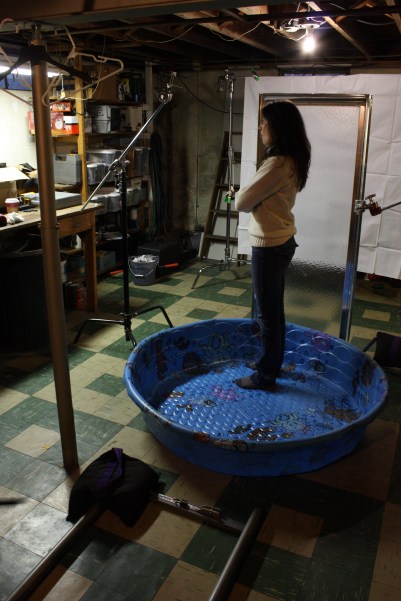
Day 6: Int. Basement

Posted in Films on November 28, 2010 by baker

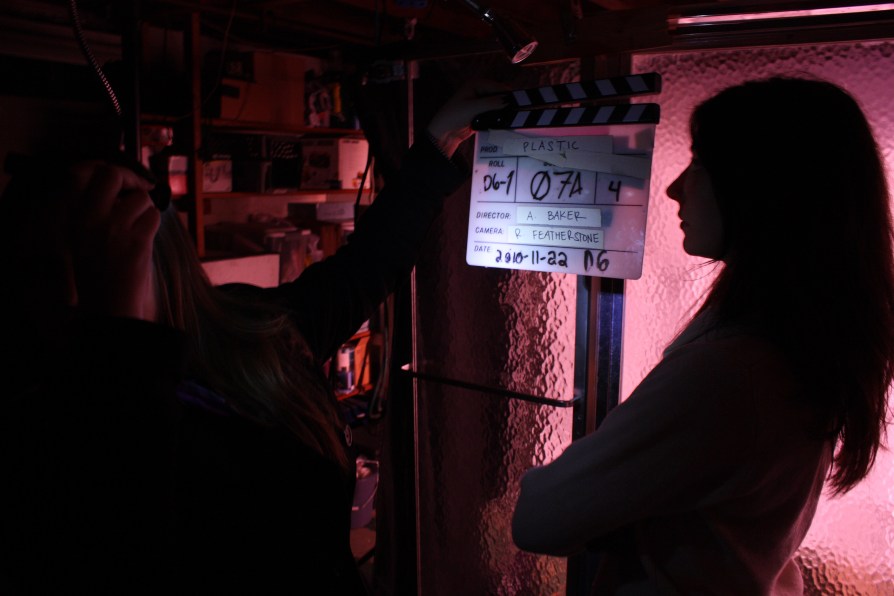
Beacon, NY.  November 22, 2010.

Plastic Day 6

Posted in Photography on November 24, 2010 by baker

Beacon, NY. November 22, 2010.